Train transport





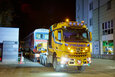
The challenge
Getting a railcar from A to B without rails
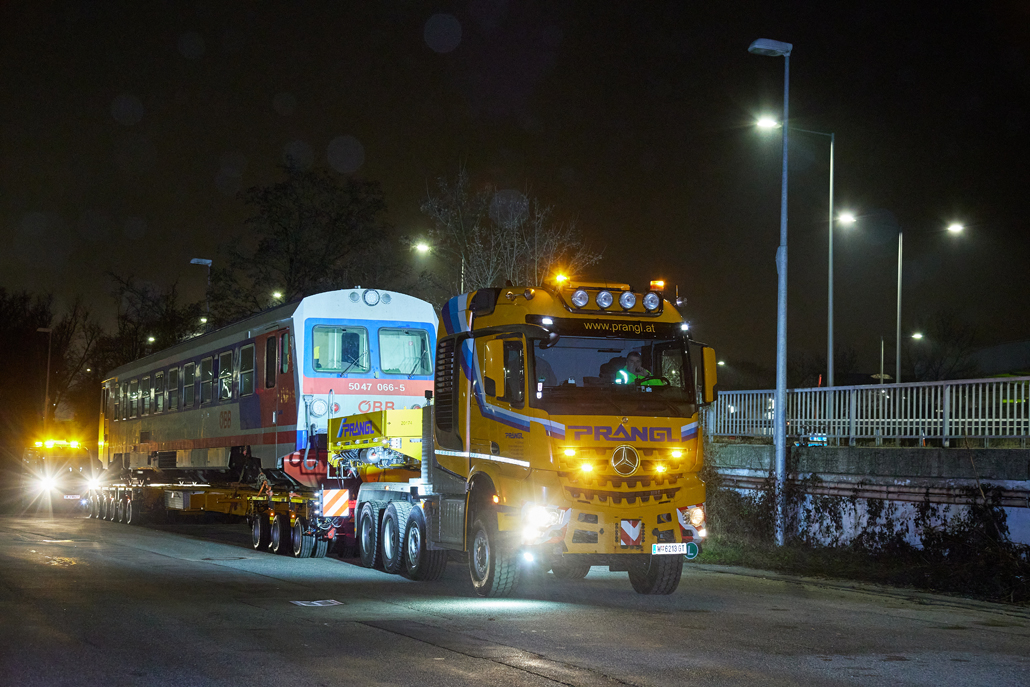
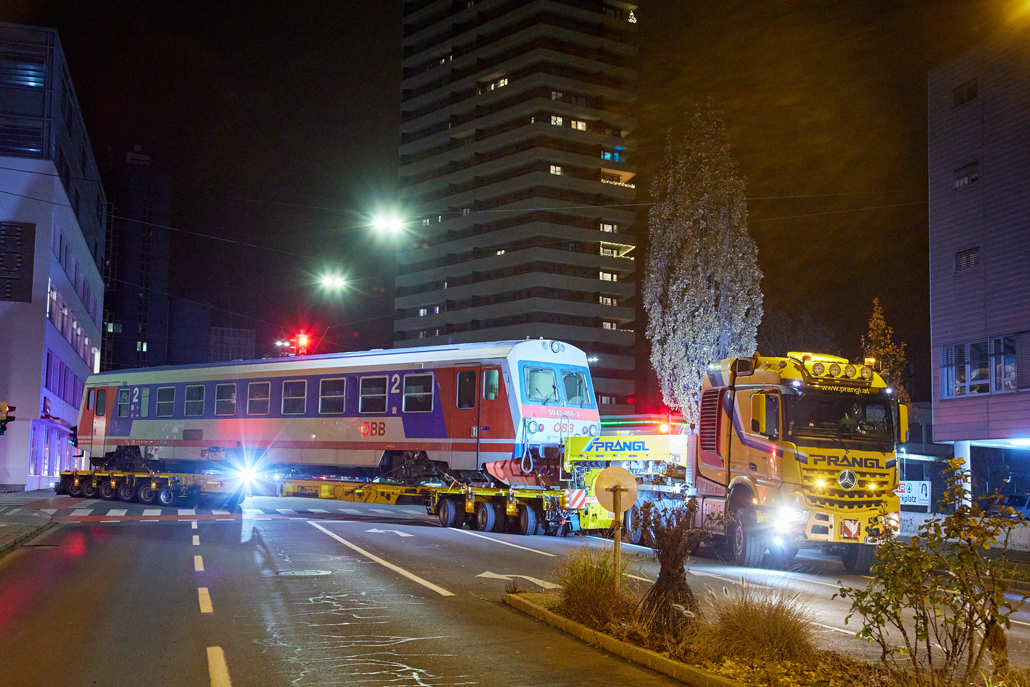
An ÖBB railcar weighing in at 58 tonnes was to be moved from Linz city harbour to the Mühlkreis railway station in Linz Urfahr. But the question was how, when no railway connection exists between the two stations? A challenge that a specialist like Prangl is only too happy to accept.
Our solution
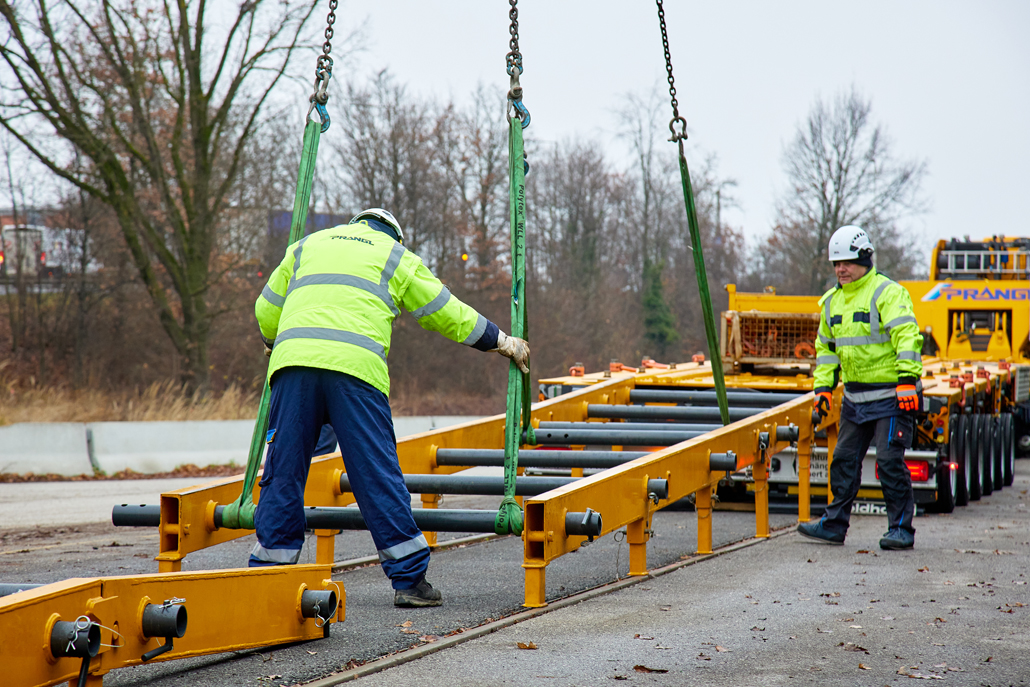
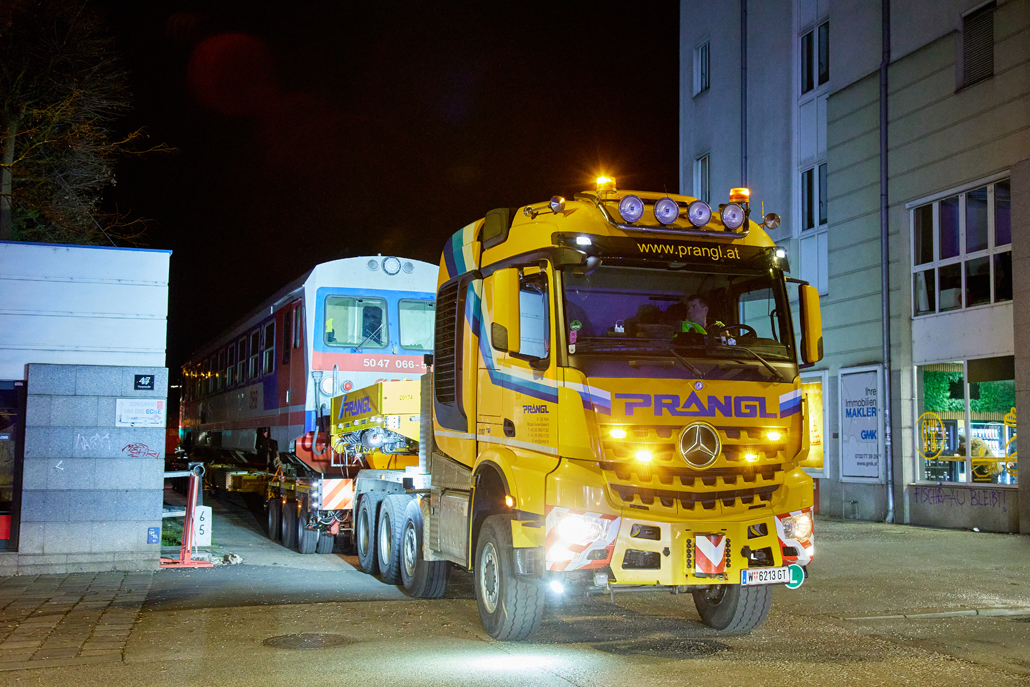
9-axle rail vehicle transporter
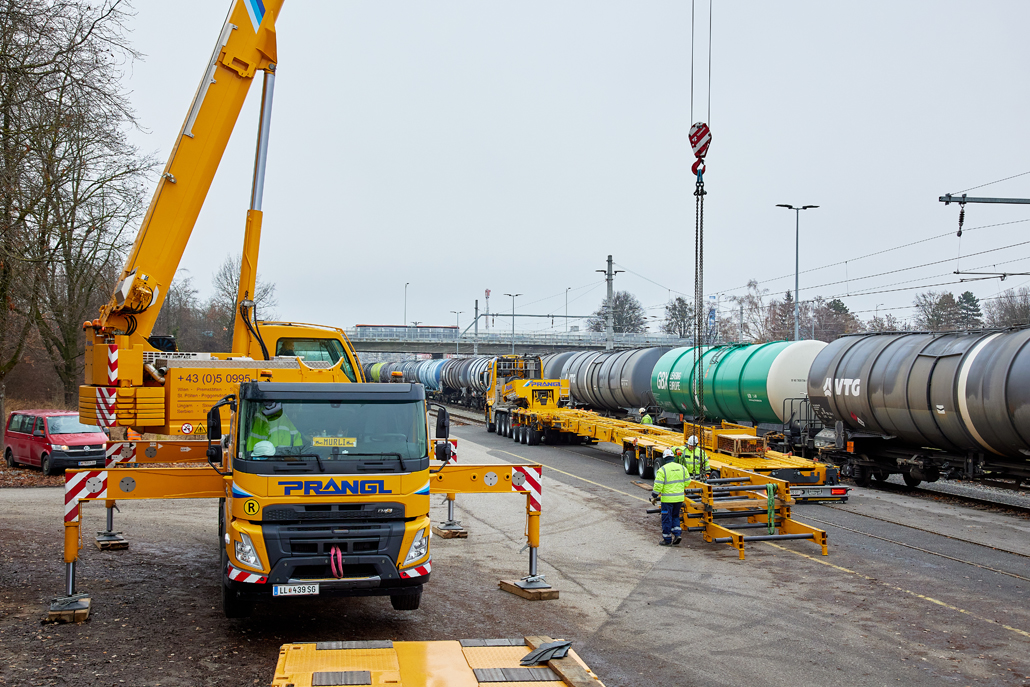
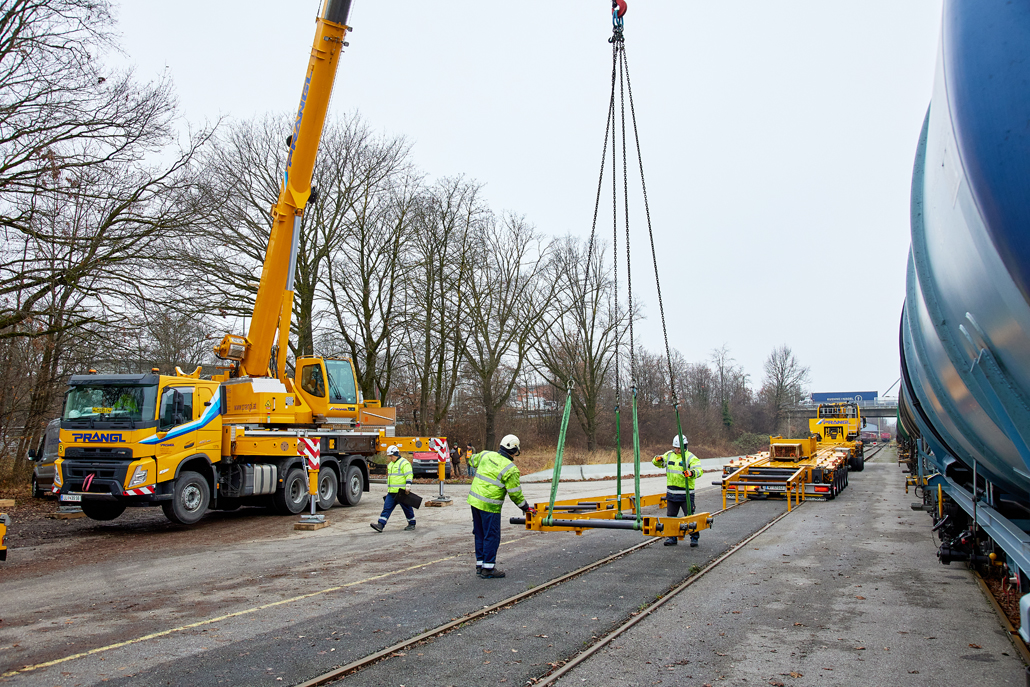
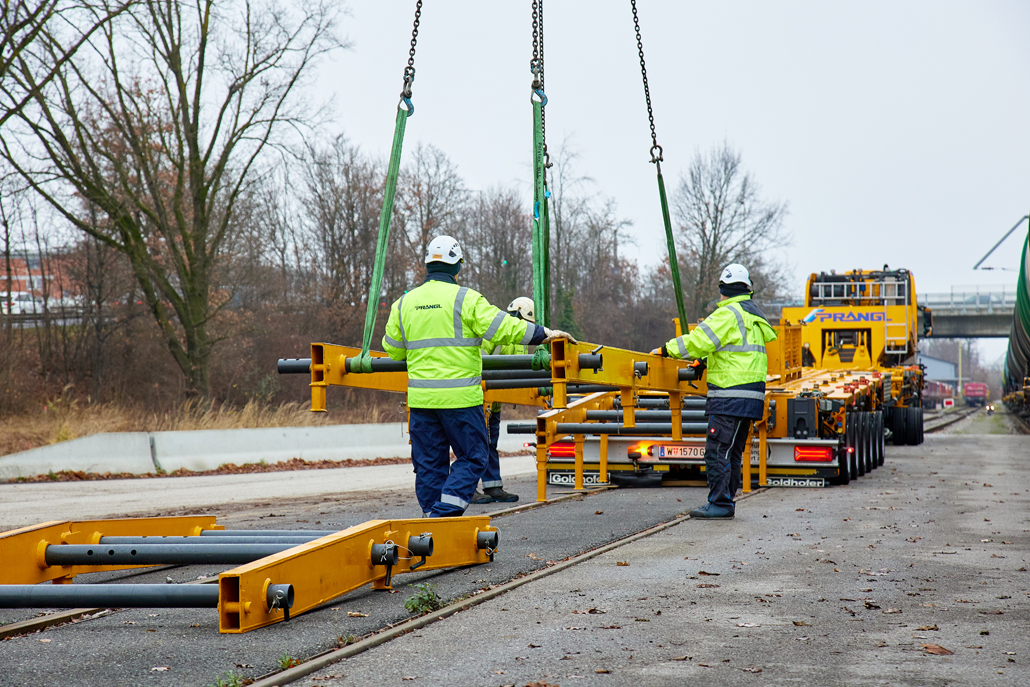
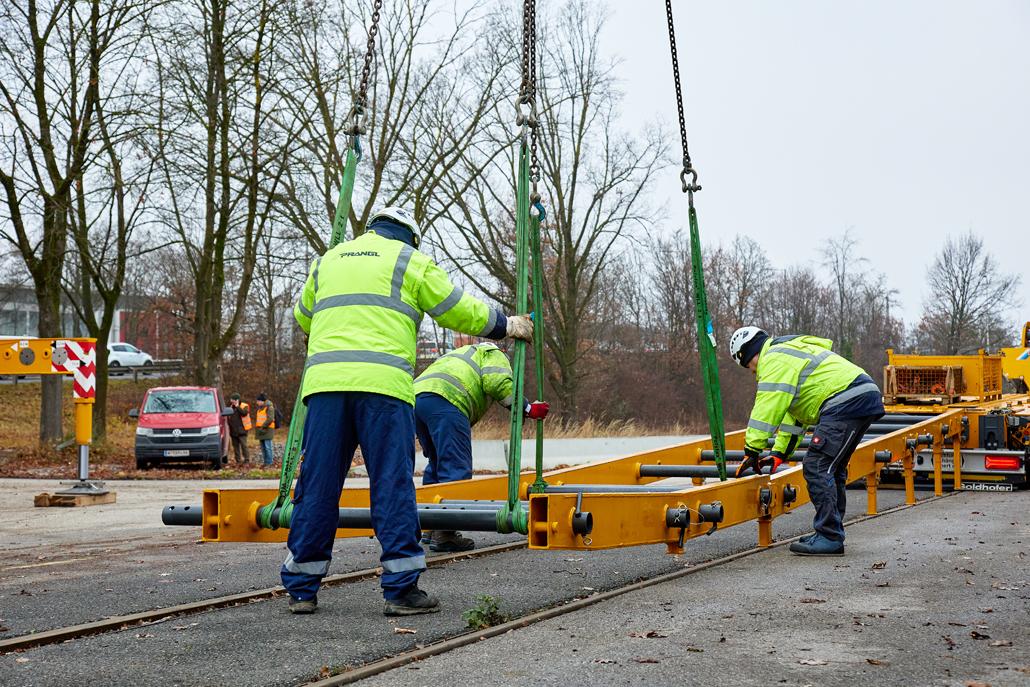
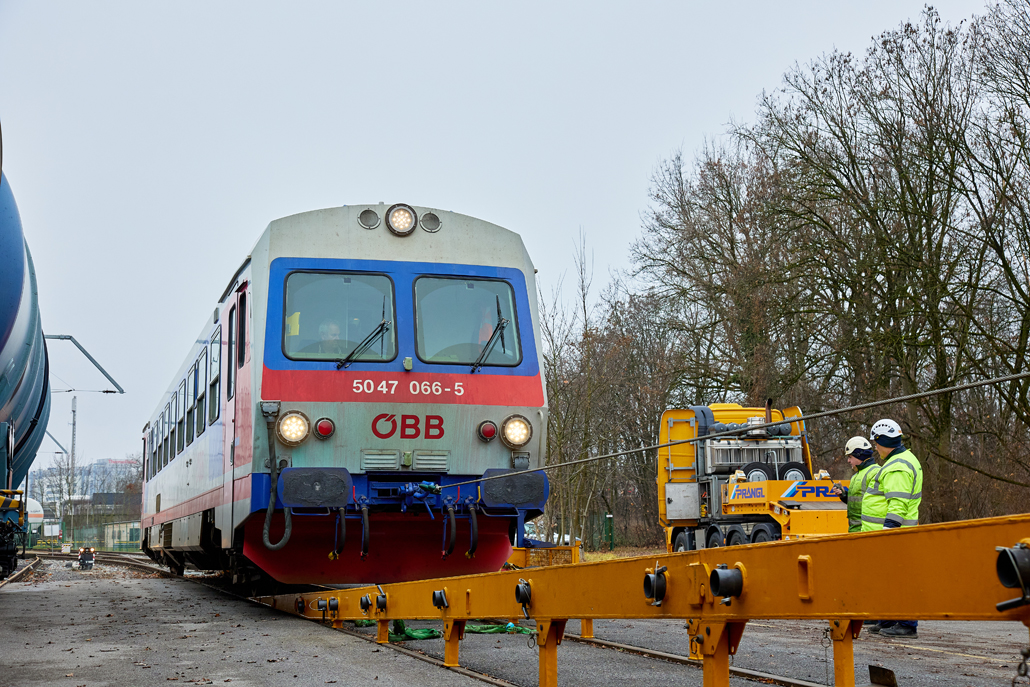
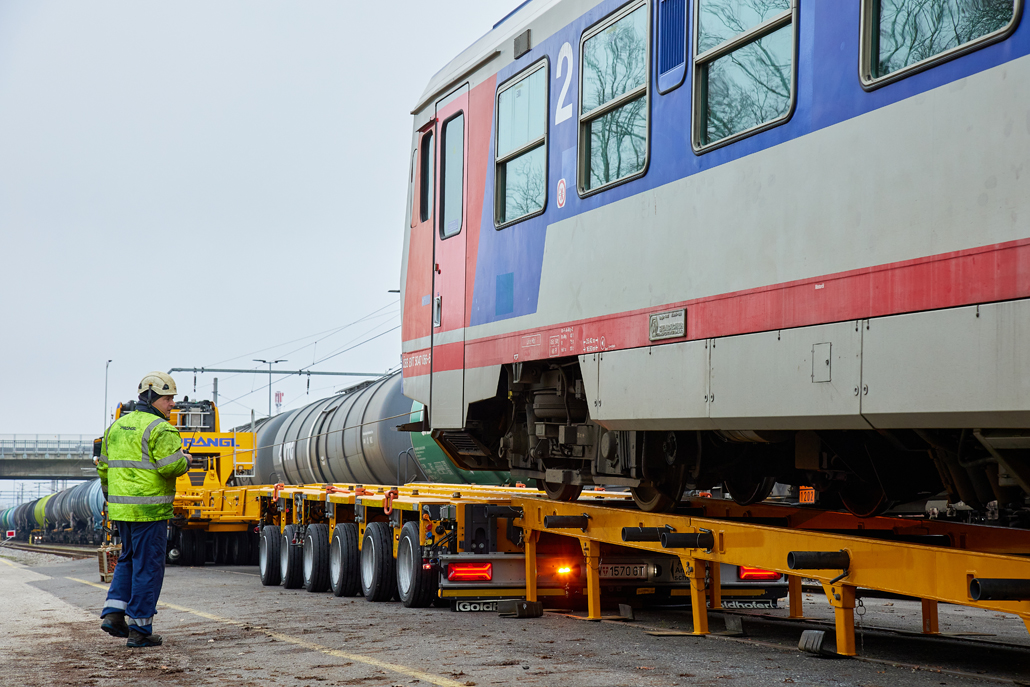
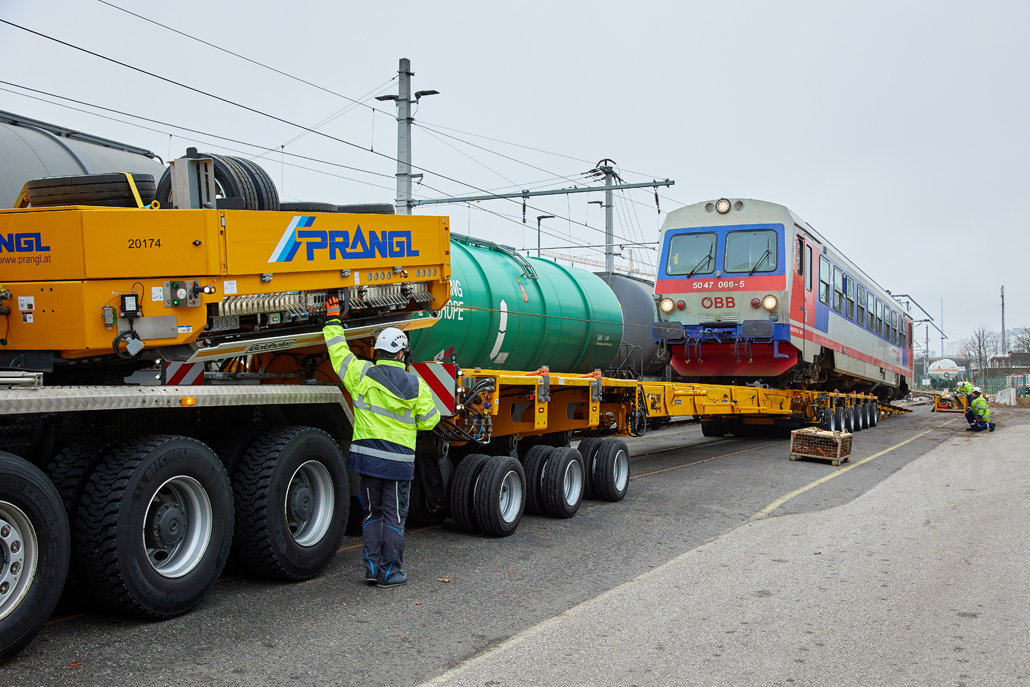
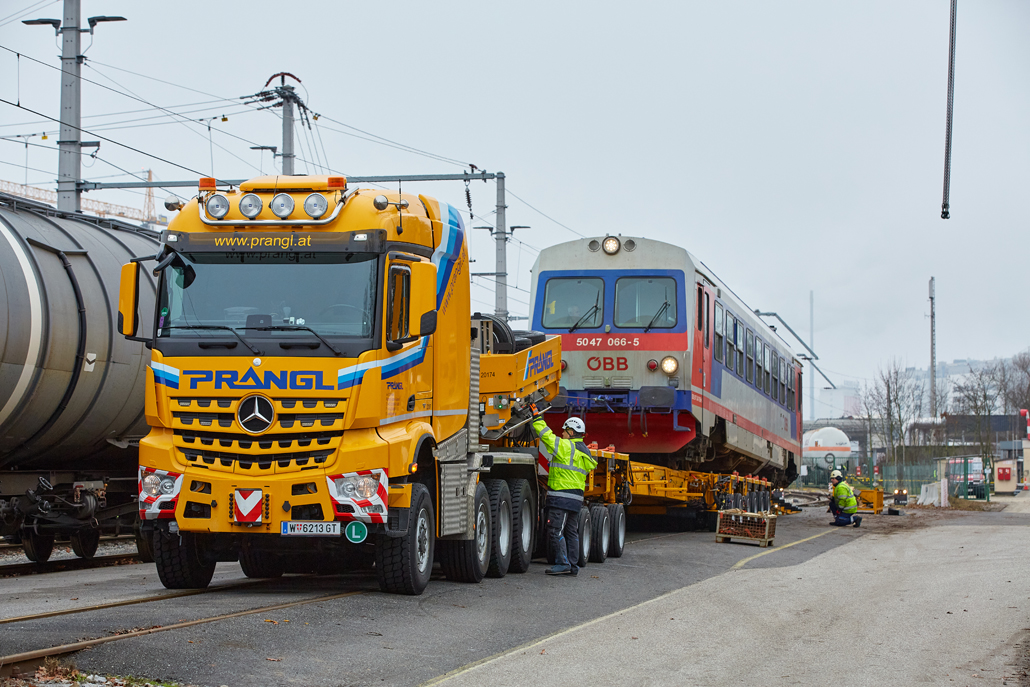
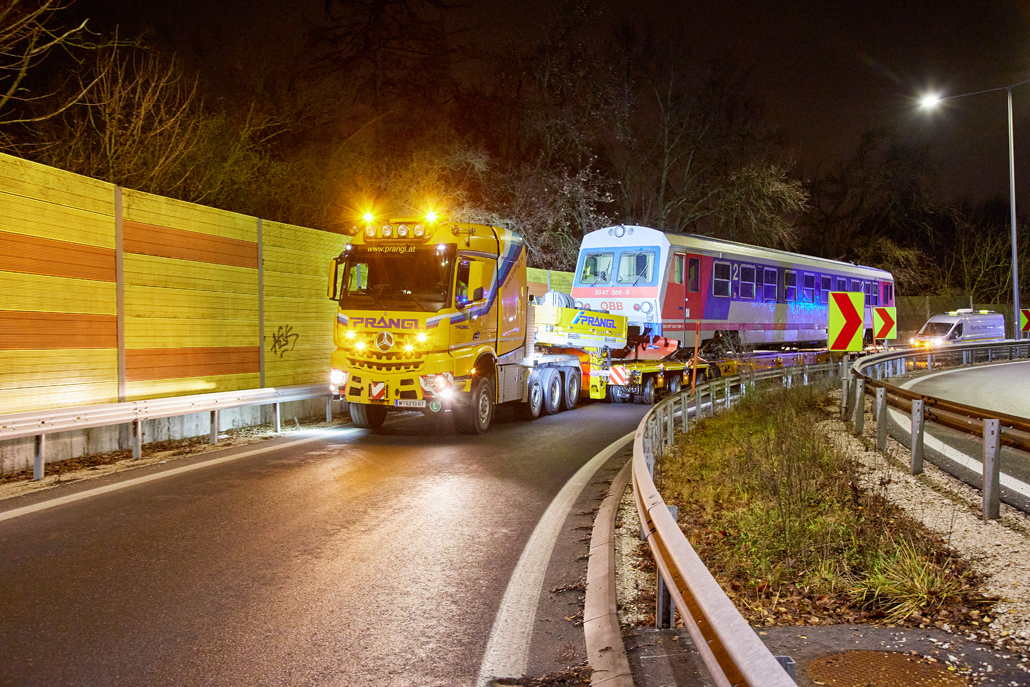
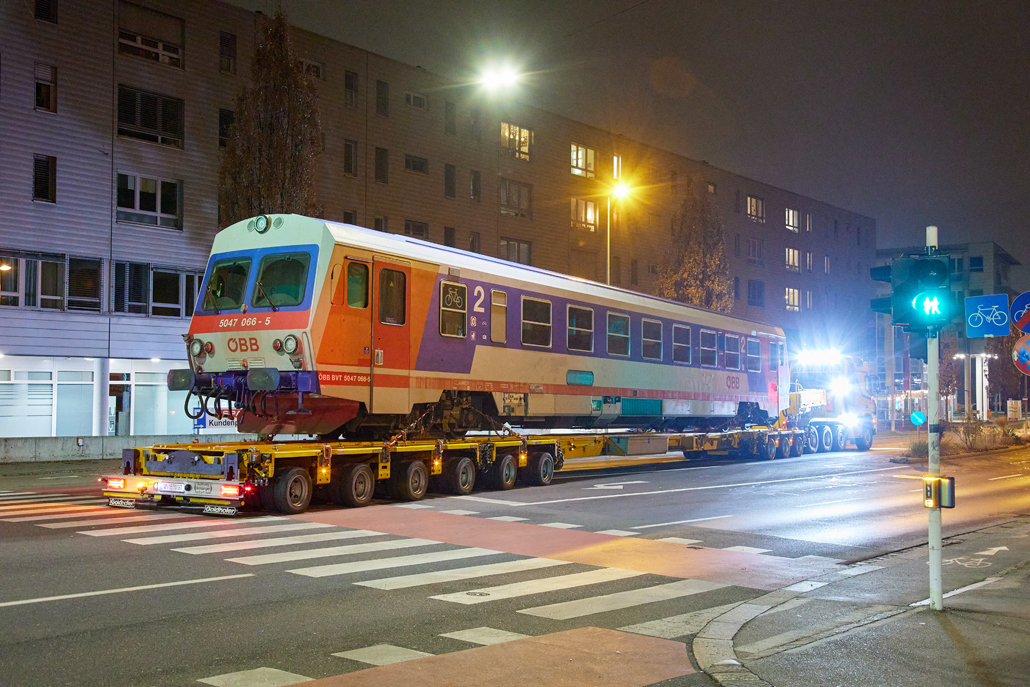
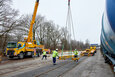
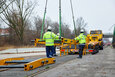
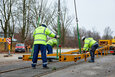
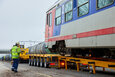
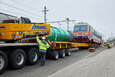
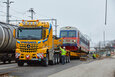
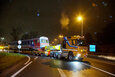
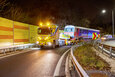
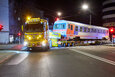
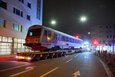
Once again, Prangl came up with a solution: road transport on a 4-axle HGV combined with a special 9-axle rail vehicle transporter. Work began at lunchtime: loading the train from the rail system onto the transporter required a special ramp consisting of several elements. The parts had been delivered beforehand by the 4-axle tractor unit and were waiting at the city harbour. One element after the other was moved using a 50 tonne truck-mounted crane – all while observing lifting and turning restrictions due to the overhead line – and installed by Prangl employees.
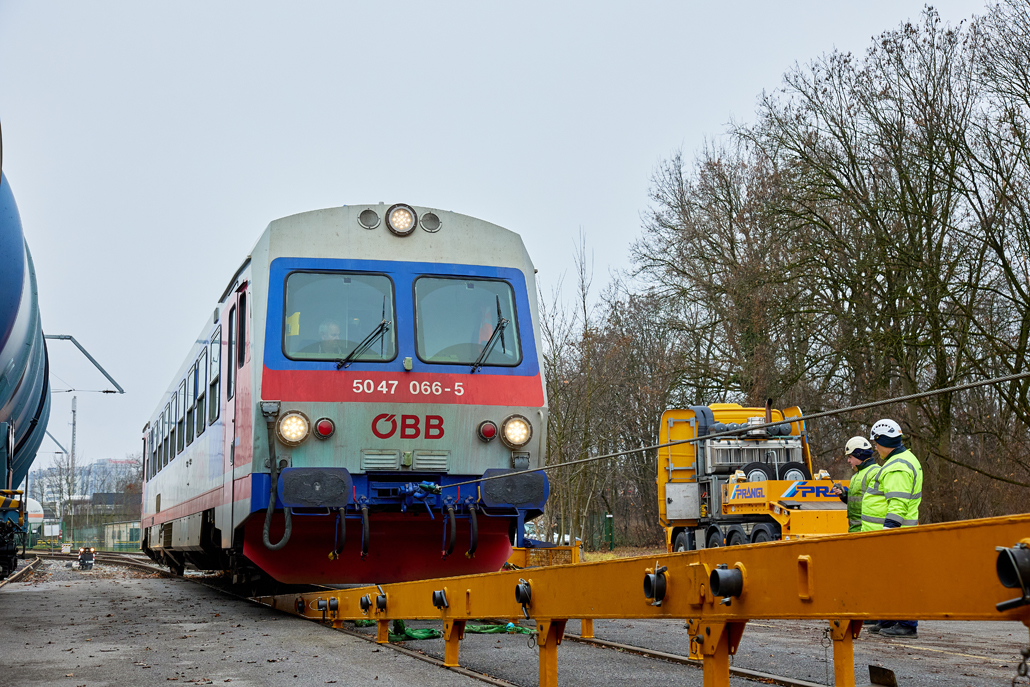
85-tonne railcar
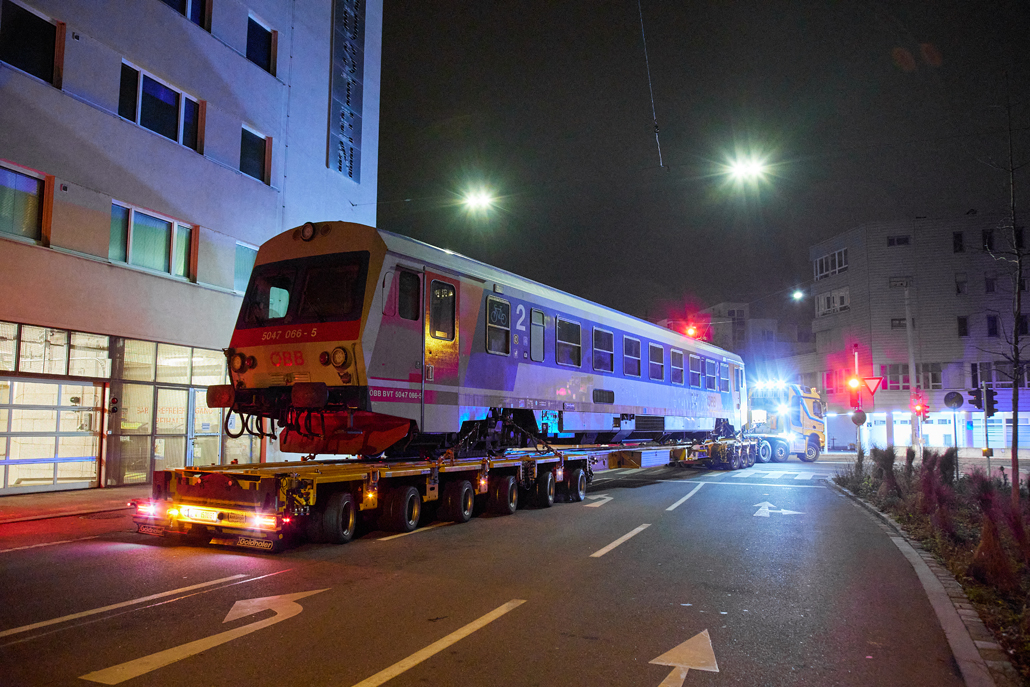
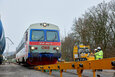
In this way, the rail ramp was created piece by piece. The ÖBB railcar, which was 25.50 metres long, 2.83 metres wide, 3.80 metres high and weighed in 58 tonnes, was waiting to be loaded and could be very slowly and carefully pulled onto the special trailer via this access ramp using a cable winch. While the heavy transport was scheduled for a night-time departure, the first task was to reload the ramp elements onto the semi-trailer and transport them to the unloading point at the Mühlkreis railway station.
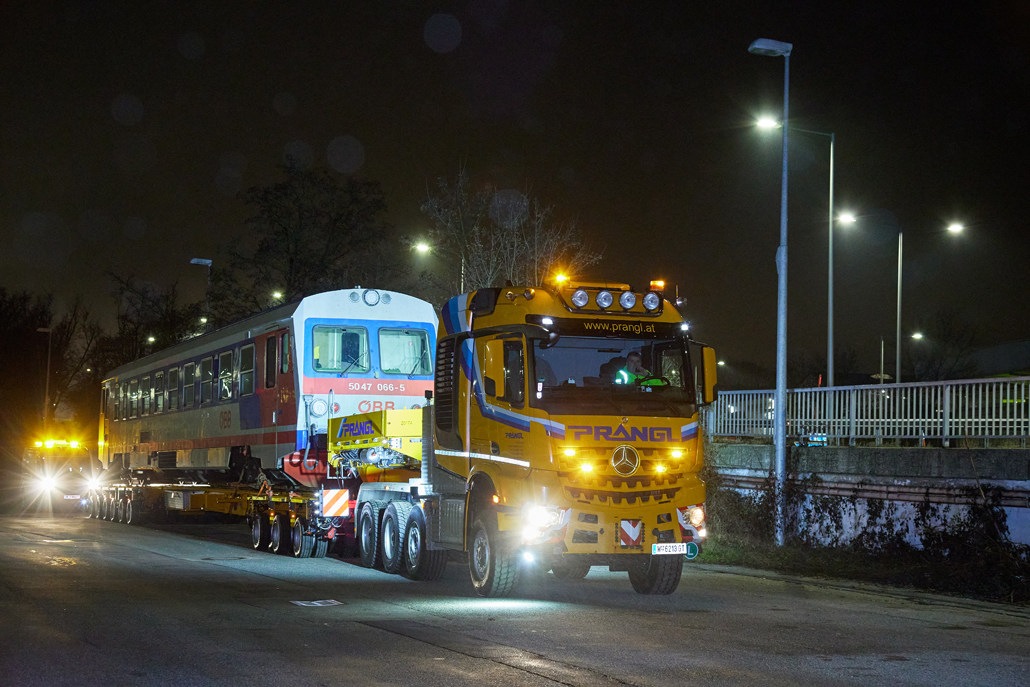
36.50 metre long convoy
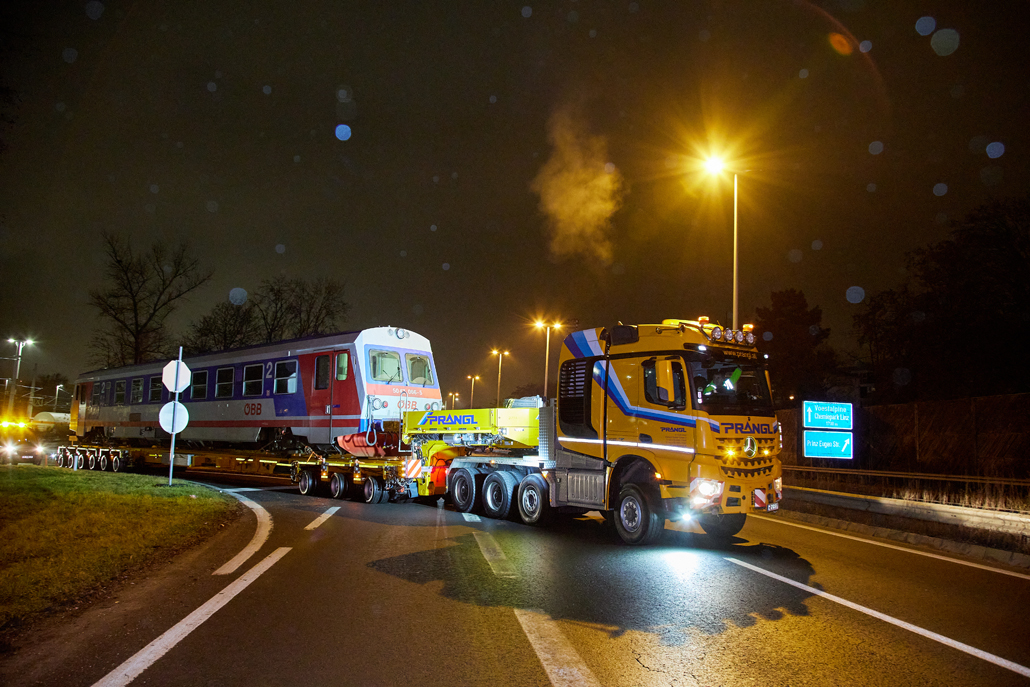
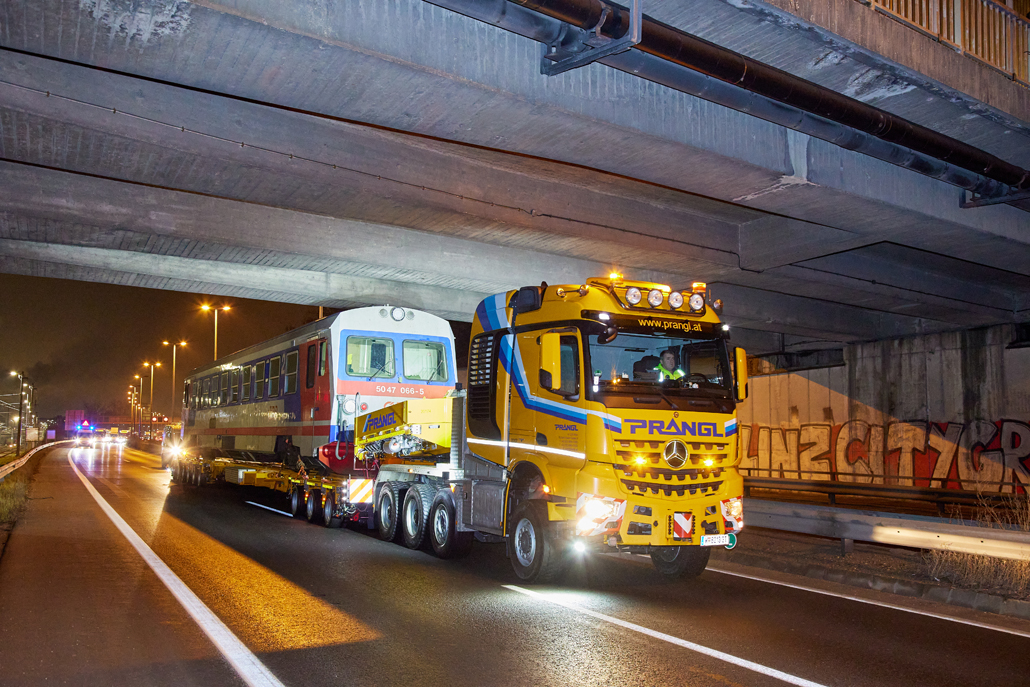
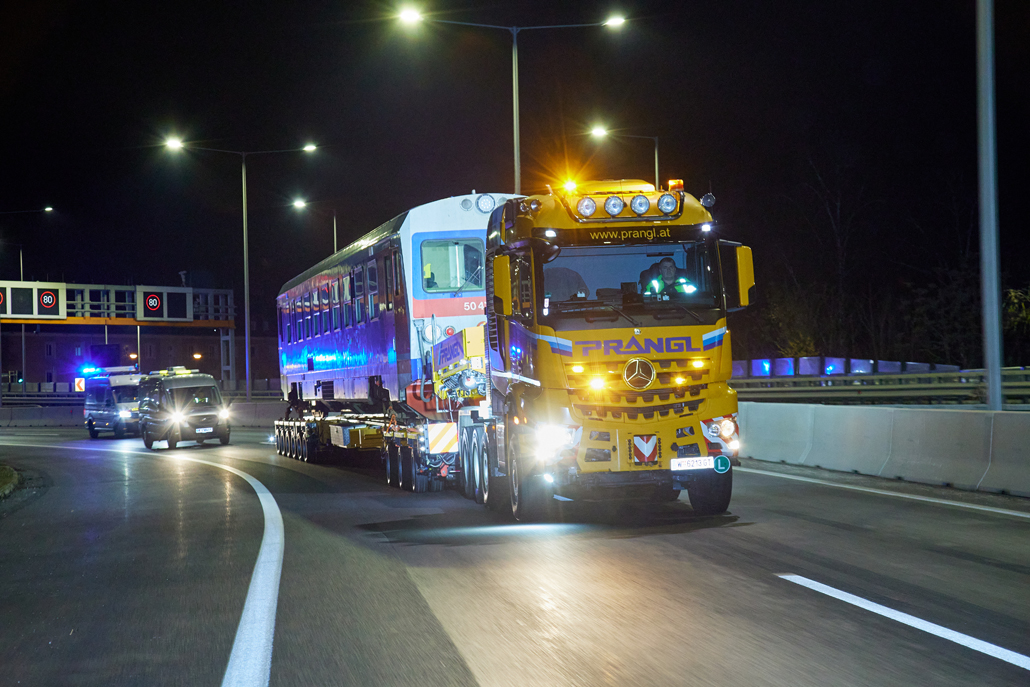
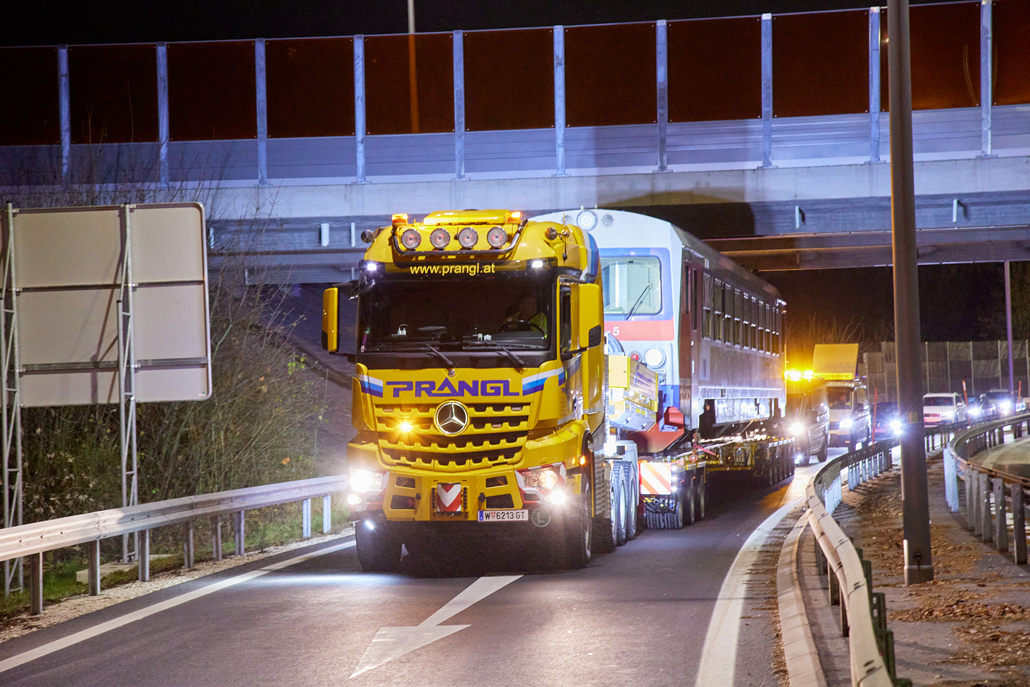
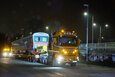
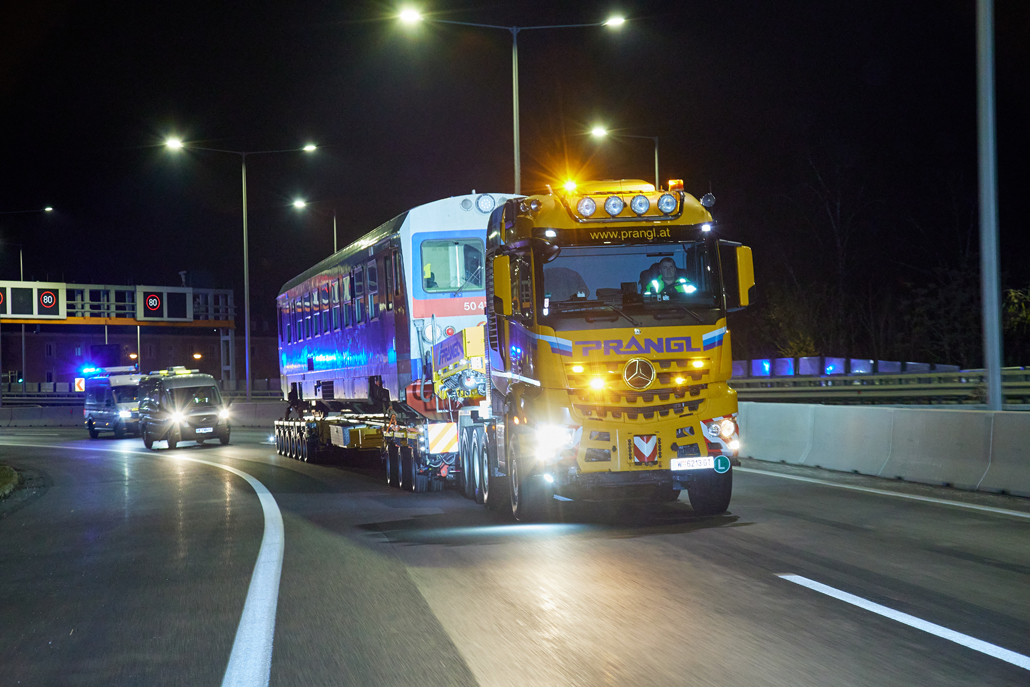
At 10 pm, the heavy duty transportation with a total length of 36.50 metres, a total width of 3.80 metres, a height of 4.60 metres and a total weight of 129.10 tons, finally set off on its way. The first hurdle was the slip road onto the Mühlkreis motorway right next to the city harbour, which had to be closed at short notice for this project. This was because the convoy not only needed the entire width of the motorway at the access point – after travelling a short distance it came to a halt in front of a bridge, where the 9-axle vehicle was lowered centimetre by centimetre before moving beneath the bridge at walking pace. The exit after the Danube bridge also demanded the HGV driver's full concentration, as the bend had to be negotiated very slowly.
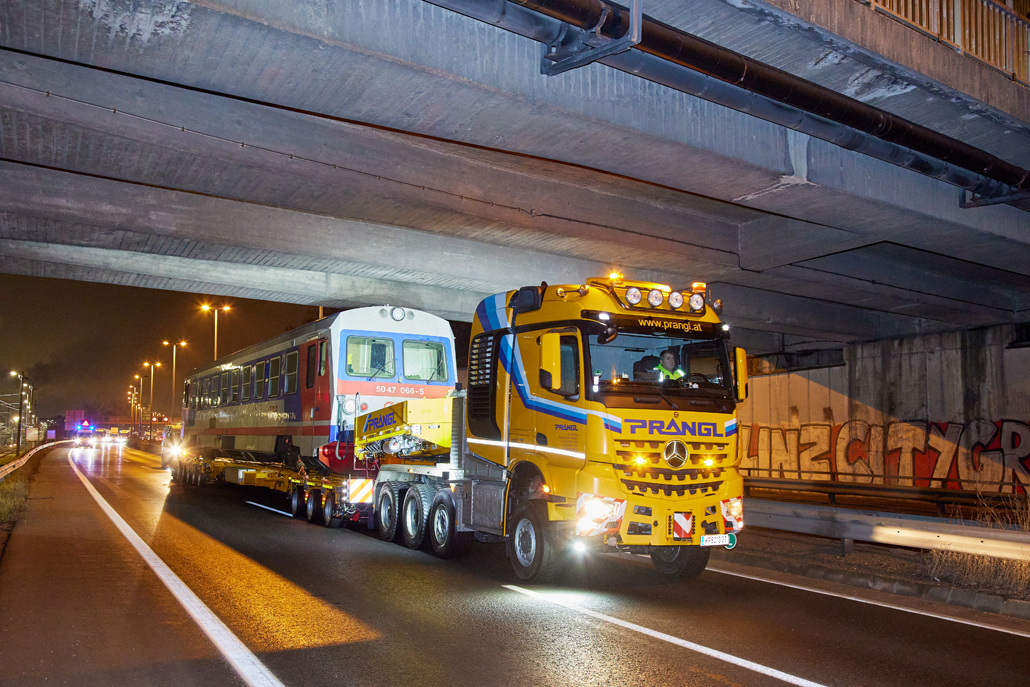
320 metres in reverse gear
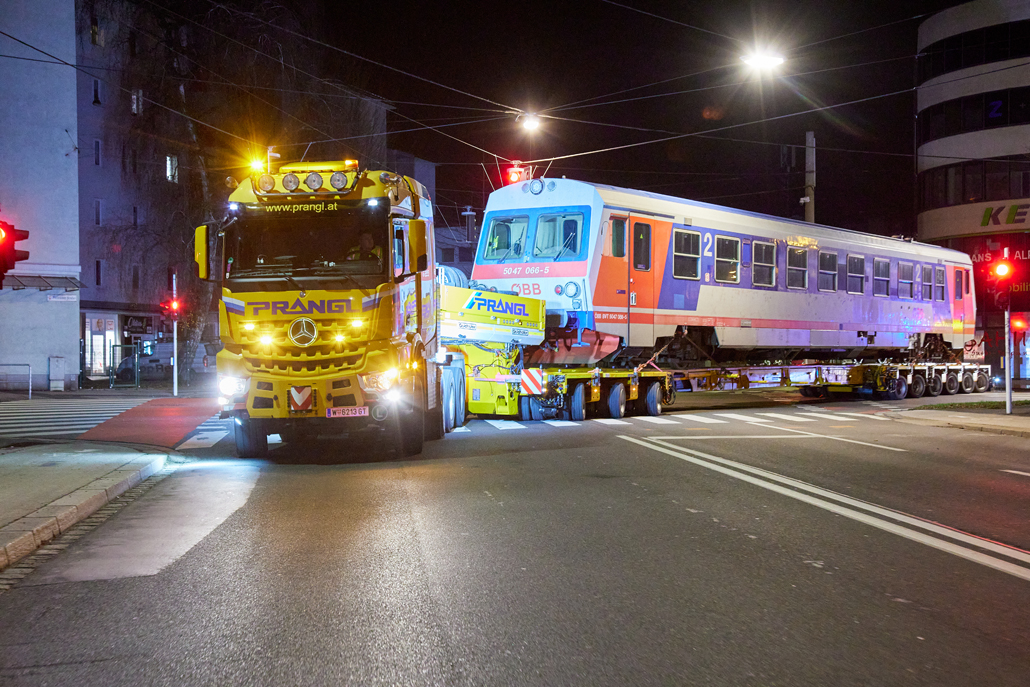
The rest of the journey through the city centre of Linz at night was challenging due to the convoy's impressive dimensions. The escort vehicles had to repeatedly close sections along the route to permit safe passage – often on the opposite carriageway. And the final section was the trickiest of all. In order to get the railcar back onto the railway tracks, the driver of the long transporter was required to reverse along the 320 metre long road. This went seamlessly and the train could be unloaded at its destination via the prepared ramp.

TWO OPERATIONS OF MANY
We are working daily on your projects. See two examples of our complete range of services.
ALL PROJECTS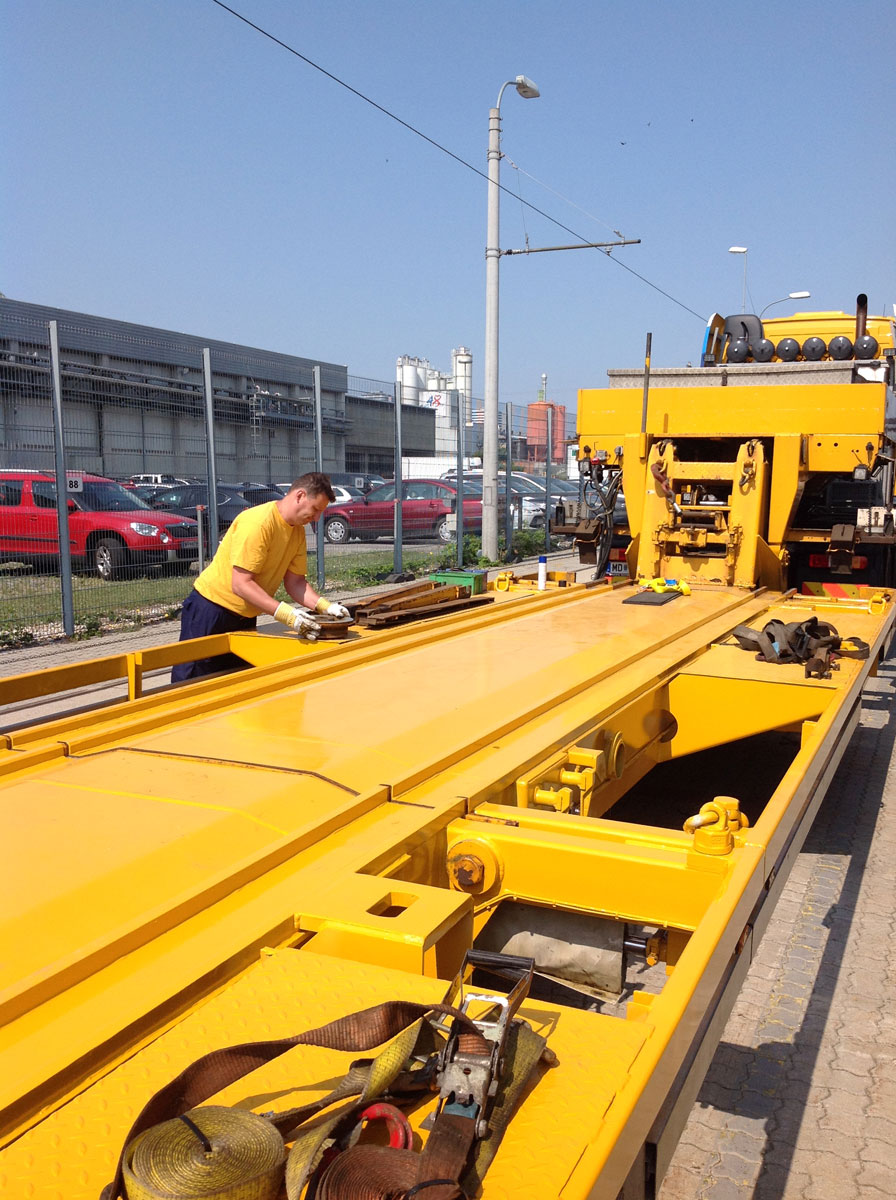
![[Translate to EN:] Zugmaschine, LKW, Rohradapter, Turmsegment](/fileadmin/content/projekte/2021/04_Rohradapter/Galerie/Teaser_DD4B9742.jpg)